
In San Luis Obispo County, there is an estimated one licensed child care space for every four children ages 0 to 5. Local research also found particularly limited options for infants and toddlers, while 81% of families seeking child care referrals needed full time care and 73% needed care in order to work.
The economic implications are significant. Research cited in The Community Foundation San Luis Obispo County’s 2024 Child Care Report estimated that meeting the low end of potential child care need in SLO County could generate more than $108 million in annual economic activity and support or create 425 jobs.
Behind those numbers are families balancing work and the availability and cost of care, employers building and retaining a workforce, child care providers navigating a challenging business environment, and communities seeking greater economic opportunity.
These challenges do not stop at county lines. Increasingly, neither do the solutions.
Six Counties, One Shared Vision
The Uplift Child Care Coalition brings together community foundations and cross sector partners across six Central Coast counties around a common goal: strengthening child care as both a child development priority and an economic development strategy.
By connecting leaders from philanthropy, early childhood education, economic development, local government, business, planning, and other sectors, the Coalition creates opportunities to share knowledge, identify promising approaches, and advance solutions with relevance across the region.
The Community Foundation San Luis Obispo County is proud to play a leadership role in this long term effort.
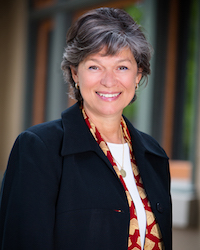
As Community Foundation CEO Christine Dawson explains:
“The Community Foundation is proud to be part of this long term regional effort to expand access to quality child care, strengthen families and the workforce, and advance economic mobility throughout the Central Coast.”
The regional approach reflects the complexity of the issue. Expanding access requires attention not only to the number of available spaces, but also to the child care workforce, facilities, land use and local policies, the needs of working families, and the role employers and communities can play.
Our local research identified many of these same priorities, including strengthening the child care workforce, supporting child care businesses, addressing land use barriers, engaging employers, and more fully integrating child care into economic development strategies.
Building Momentum Together
The Coalition has translated that shared understanding into resources and strategies communities can use.
Partners have developed a Best Practice Portfolio, resources outlining the roles different sectors can play in building child care capacity, and a Shared Vision for Child Care that organizations throughout the Central Coast can endorse and help advance.
This summer, more than 60 participants representing all six counties gathered for the Uplift Child Care Coalition Showcase Event to exchange ideas, share what has been learned, and help shape the next phase of the work.
The breadth of participation reflects an important shift. Child care is increasingly being considered not only as a service for families, but as an issue connected to workforce development, economic mobility, land use, and the long term vitality of our communities.
From Shared Vision to Action
One area of focus ahead is the Child Care Facilities Action Network, or CCFAN, which addresses a practical barrier to expanding child care: creating and expanding the physical spaces where care can take place.
Our local research identified restrictive zoning, permitting requirements, fees, and other land use policies among the challenges that can slow the development of new child care spaces.
Through CCFAN, Child Care Facilities Specialists will participate in nine months of peer learning, fieldwork, land use surveys, coaching, and engagement with planning departments. Participating cities and counties will have opportunities to assess existing policies, learn from practices across the region, and identify opportunities to make child care development more feasible.
This is the value of a regional coalition: communities do not have to solve the same problems independently. They can share what works, learn from one another, and build on collective experience.
Add Your Voice
There is significant work ahead, and The Community Foundation San Luis Obispo County is proud to continue alongside the partners moving it forward.
The Uplift Child Care Coalition reflects an approach we believe is essential to addressing complex community challenges: bringing together people with different expertise, connecting local experience to regional opportunity, and creating the conditions for collective action.
Across six counties, that work is building a stronger, more coordinated vision for child care and for the children, families, workforce, and communities that depend on it.
Organizations and community leaders throughout the Central Coast are invited to be part of what comes next.
Learn more about the Uplift Child Care Coalition